Late Season Aurora — Why March and April Are Worth It
Most people think aurora season ends in February. They are wrong. March and early April offer the spring equinox effect, fewer crowds, cleaner skies, and overlapping ski touring and whale watching season — here is why late-season chasing is Tromsø's best-kept secret.
Tromsø.AI Editors
Local expertise · Tromsø, Norway
Share this article:Late Season Aurora — Why March and April Are Worth It
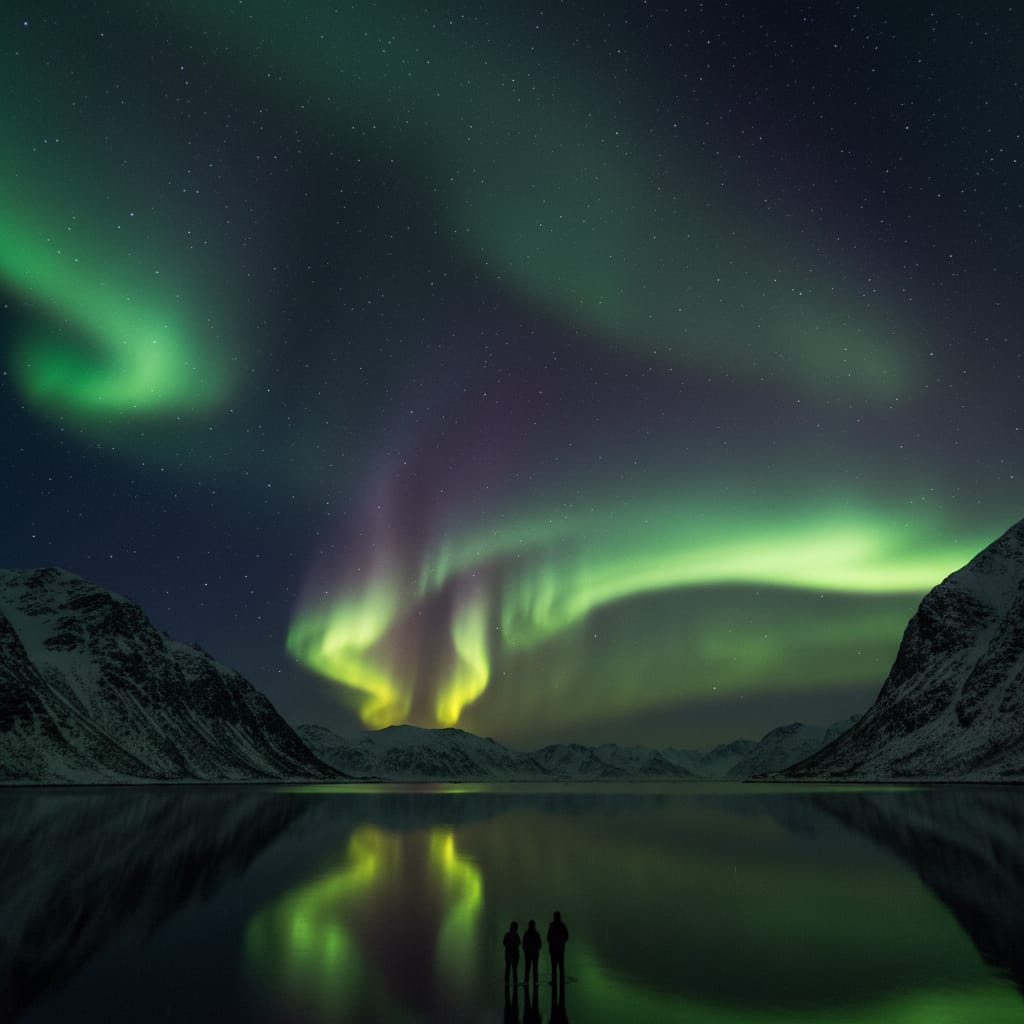
<p>Ask most people when to chase northern lights in Tromsø and they will say December or January. They are not wrong — peak winter has its advantages. But they are missing something that experienced aurora hunters have known for years: <strong>March and early April are arguably the most underrated time in the entire arctic aurora calendar.</strong></p>
<p>If you are reading this in late March 2026, the season is not over. There are still dark, clear nights ahead — and specific atmospheric and geomagnetic conditions working actively in your favour.</p>
<h2>The Spring Equinox Effect: Why March Aurora Is Statistically Stronger</h2>
<p>Here is the phenomenon most people do not know about. Geomagnetic activity peaks twice a year: near the spring and autumn equinoxes. This is caused by the <strong>Russell-McPherron effect</strong> — a consequence of how Earth's magnetic field orientation relative to the sun changes near the equinoxes. Around March 20–22 and September 20–22, solar wind particles couple more efficiently into Earth's magnetosphere, generating elevated geomagnetic activity even without exceptional solar events.</p>
<p>Aurora observatories and geomagnetic data consistently show elevated KP statistics in mid-March and mid-September compared to December and January. The lights do not merely remain possible in late March — they are statistically more likely to be active. Check the <a href="/aurora">live aurora forecast</a> around the equinox dates and you will often see elevated KP forecasts relative to the surrounding weeks.</p>
<h2>Five Reasons Late Season Is Underrated</h2>
<h3>1. Cleaner Skies Than Mid-Winter</h3> <p>December and January in northern Norway are dominated by Atlantic storm tracks. These bring dramatic weather and, frequently, persistent cloud cover. By late February and into March, the dominant weather pattern shifts. High-pressure systems become more common, Arctic air masses more stable, and clear-sky windows more predictable. March typically has some of the best sky conditions of the entire aurora season — a fact that does not appear in most travel guides.</p>
<h3>2. Longer Twilight Window Than You Expect</h3> <p>In late March, astronomical darkness begins around 22:00 and lasts until approximately 04:00 — a six-hour window. That is considerably less than January's 18–20 hours of darkness, but a KP 4 event in a six-hour window of clear sky delivers exactly the same aurora as it would in January. Quality of darkness matters more than quantity.</p>
<h3>3. Dramatically Fewer Tourists</h3> <p>The December through February period is intense. Tours fill weeks in advance. Accommodation prices peak. Popular viewpoints on Kvaløya that you would share with forty other tourists in January often belong entirely to you in late March. The experience of standing alone at a frozen fjord with the aurora overhead — no crowd noise, no other headlights — is qualitatively different from the group experience, and late season is where you find it.</p>