The Ultimate Tromsø Travel Guide 2026
A practical guide woven into the story of the Arctic capital
Tromsø.AI Editors
Local expertise · Tromsø, Norway
Share this article:The Ultimate Tromsø Travel Guide 2026
You arrive in Tromsø knowing it sits far north — 69 degrees above the equator, 350 kilometers above the Arctic Circle — but the geography only becomes real when you step outside the airport and feel the air. Crisp. Clean. Quiet in a way that cities further south rarely are.
With around 77,000 residents, Tromsø is large enough to offer restaurants, hotels, nightlife, and cultural events, yet compact enough that you can walk across the city center in minutes. English is widely spoken, the currency is Norwegian Krone (NOK), and infrastructure is modern and efficient. What surprises most visitors is not how remote it feels — but how accessible.
Choosing When to Visit
The experience you have in Tromsø depends entirely on when you come.
In winter, from November to March, the city lives under long Arctic nights. Between late November and mid-January, the sun does not rise above the horizon at all. Instead, the sky glows in deep blue and violet tones during the few twilight hours of Polar Night. Temperatures typically range between -5°C and -15°C, though coastal winds can make it feel colder.
This is northern lights season.
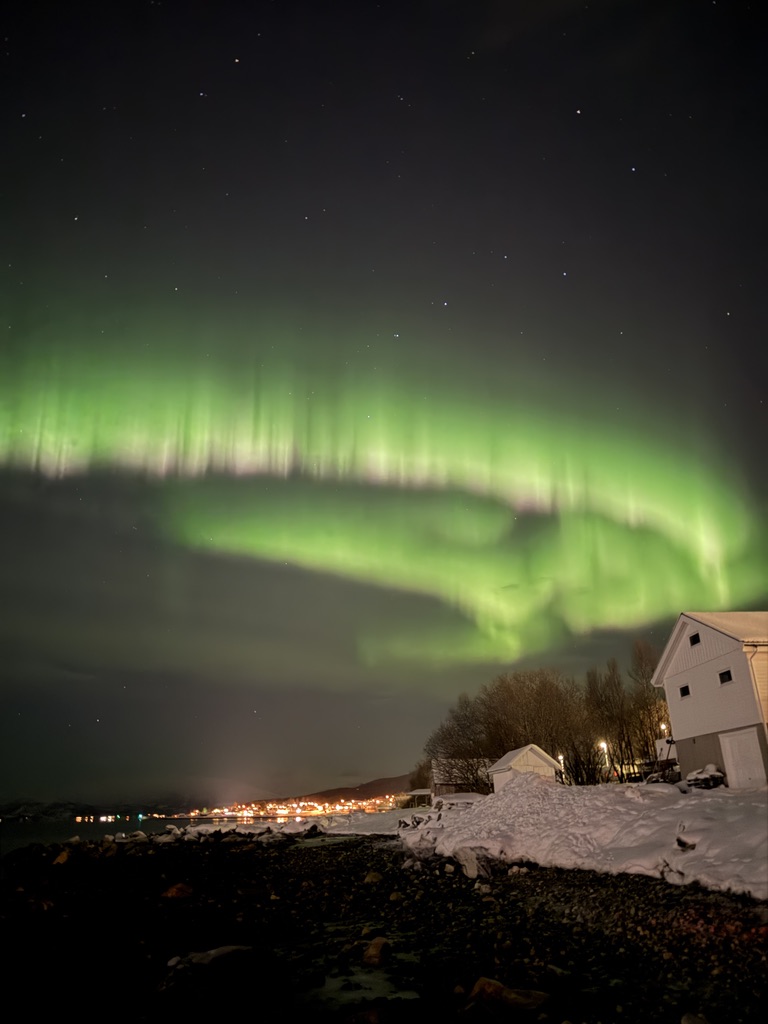
From September through March — with the darkest and most reliable period between November and February — Tromsø sits directly beneath the auroral oval. On clear nights, typically between 9 PM and 2 AM, green arcs can move across the sky when geomagnetic activity reaches moderate levels (KP index 2 or higher). Clear skies matter more than anything else, which is why many visitors join guided excursions that drive 30–90 minutes outside the city to find better weather conditions.
In summer, from late May to late July, the rhythm reverses completely. The Midnight Sun remains visible 24 hours a day between roughly May 20 and July 22. Temperatures usually range between 10°C and 20°C, and the surrounding mountains open for hiking. Kayaking, fishing, wildlife tours, and festivals replace snowmobiles and sled dogs. Sleep masks become more useful than headlamps.
There is no single “best” season — only different versions of the Arctic.
Experiencing the Northern Lights
Tromsø’s reputation as one of the world’s best aurora destinations is rooted in geography and climate. Its coastal location keeps winter temperatures milder than many inland Arctic areas, while its position within the auroral zone increases the statistical likelihood of sightings.